Summer School 2026
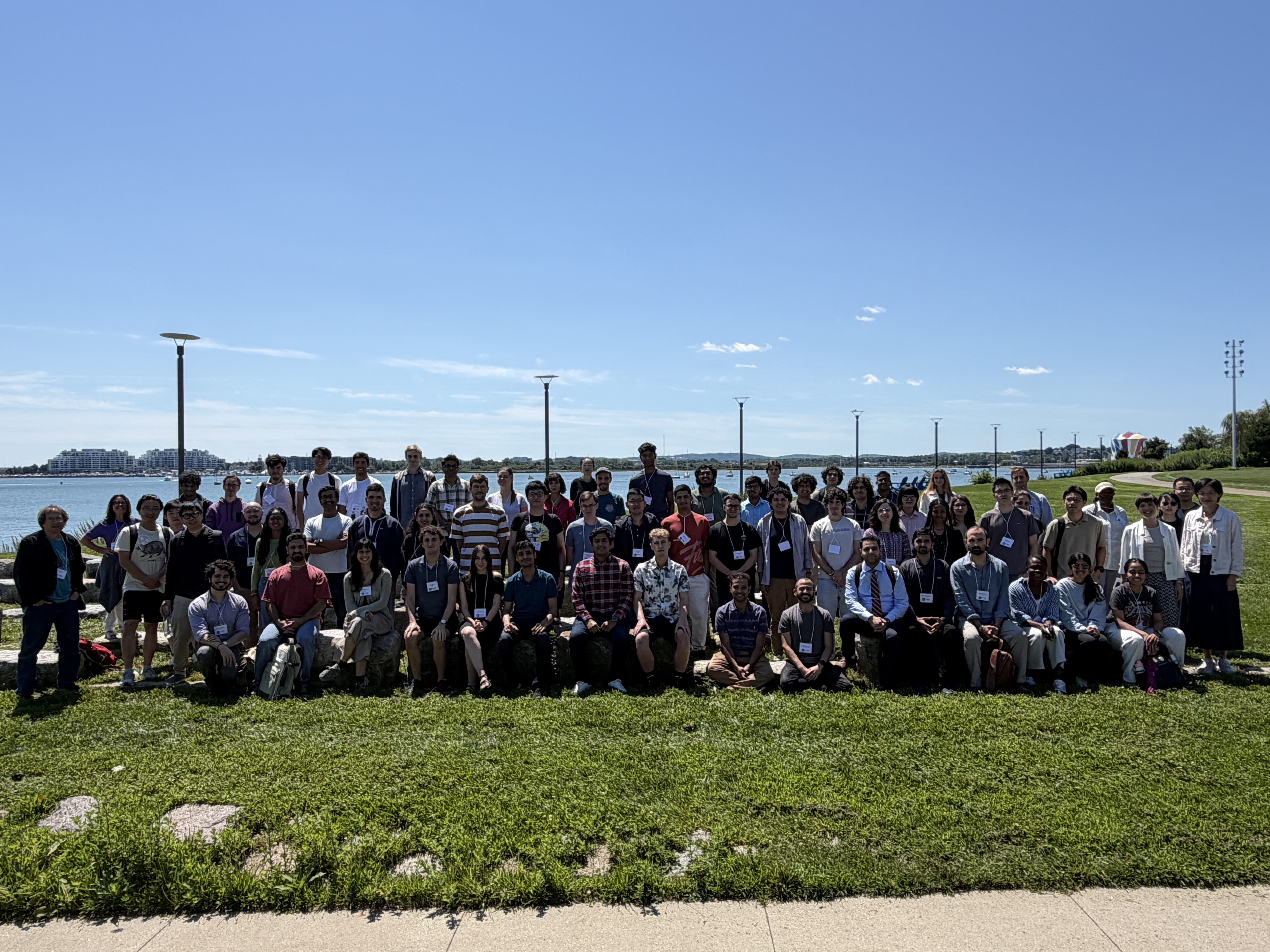
The mission of the IAIFI Summer School is to leverage the expertise of IAIFI researchers, affiliates, and partners toward promoting education and workforce development.
- August 3–7, 2026
- University of Massachusetts, Boston
The Summer School is followed by the IAIFI Summer Workshop, which is open to researchers of all career stages.
Agenda Lecturers Tutorial Leads Costs Sponsors FAQ Past Schools
About
The Institute for Artificial Intelligence and Fundamental Interactions (IAIFI) is enabling physics discoveries and advancing foundational AI through the development of novel AI approaches that incorporate first principles, best practices, and domain knowledge from fundamental physics. The Summer School will include lectures and events that illustrate interdisciplinary research at the intersection AI and Physics, and encourage global networking. Hands-on code-based tutorials that build on foundational lecture materials help students put theory into practice, and a hackathon project provides an opportunity for students to collaborate and apply what they’ve learned.
Apply
Applications are now closed for the 2026 IAIFI Summer School.
Costs
- There is no registration fee for the Summer School. Costs of dorm accommodations will be reimbursed by IAIFI, contingent upon attendance. Students for the Summer School are expected to cover the cost of travel.
- Lunch each day, as well as coffee and snacks at breaks, will be provided during the Summer School, along with at least one dinner during the Summer School.
- Students who wish to stay for the IAIFI Summer Workshop will be able to book the same rooms through the weekend and the Workshop if they choose (at their own expense).
Lecturers
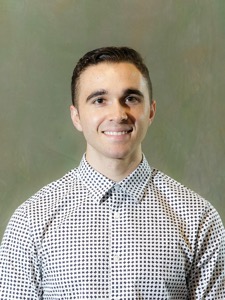
Topic: Symbolic Regression
Lecturer: Miles Cranmer, Assistant Professor, University of Cambridge
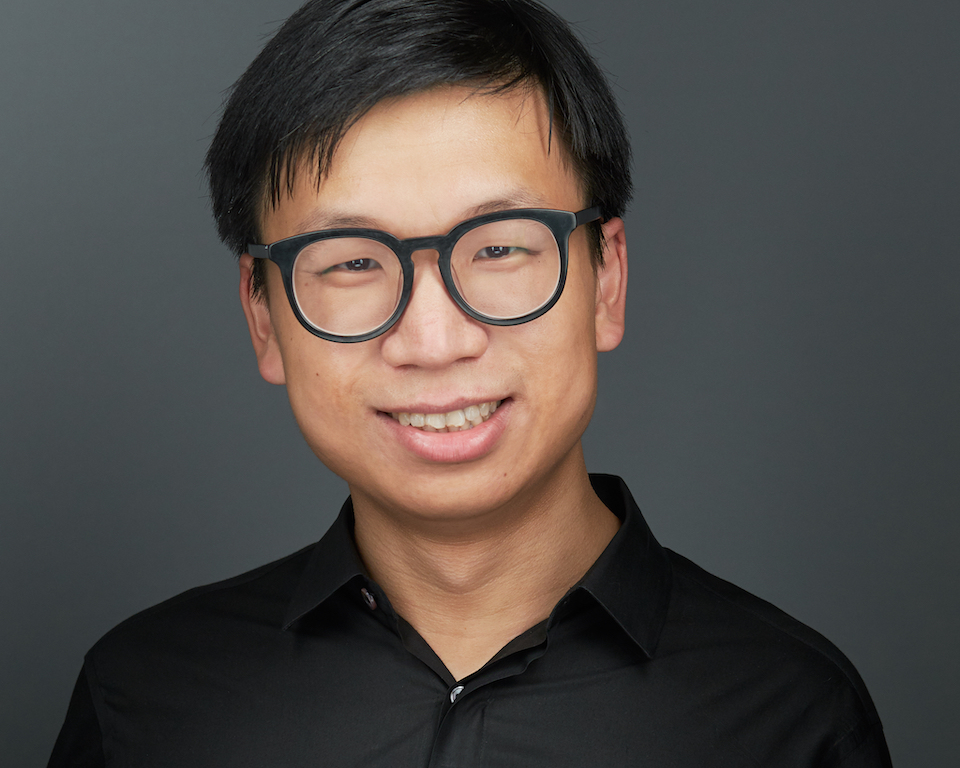
Topic: Generative Modeling/Diffusion
Lecturer: Jun-Yan Zhu, Assistant Professor, Carnegie Mellon University
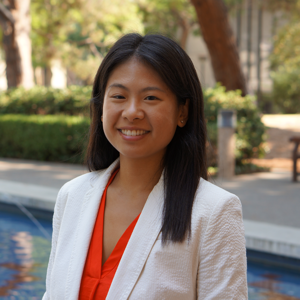
Topic: Computer Vision
Lecturer: Berthy Feng, IAIFI/Tayebati Fellow, Incoming NYU Assistant Professor starting September 2027

Topic: Simulation-Based Inference
Lecturer: Christoph Weniger, Associate Professor, University of Amsterdam
Tutorial Leads
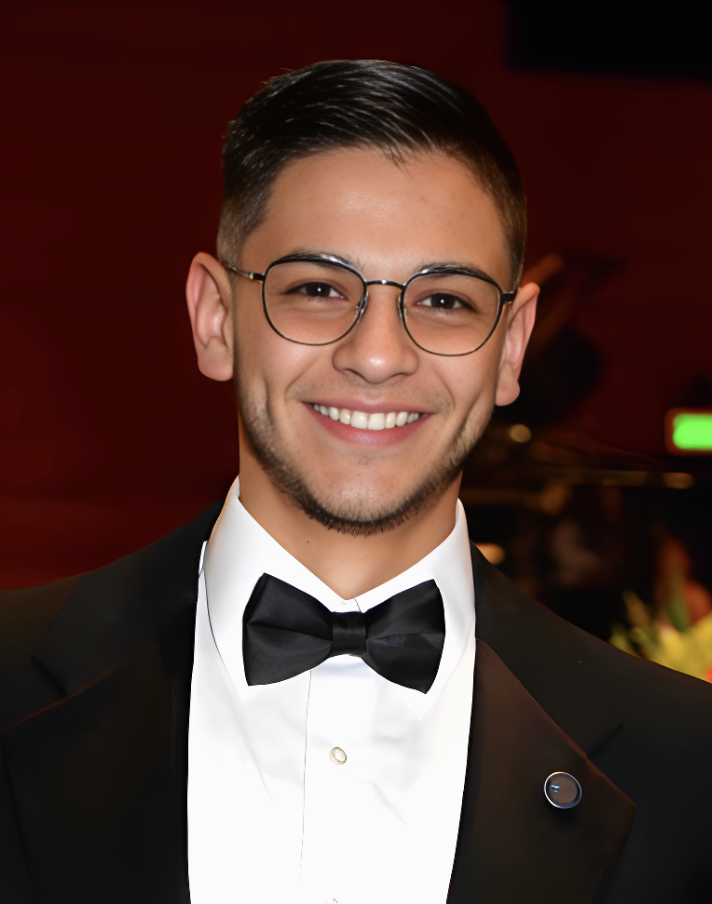
Topic: Symbolic Regression
Tutorial Lead: Jose Munoz, PhD Student, MIT
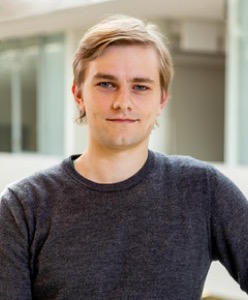
Topic: Generative Modeling/Diffusion
Tutorial Lead: Mathis Gerdes, IAIFI Fellow
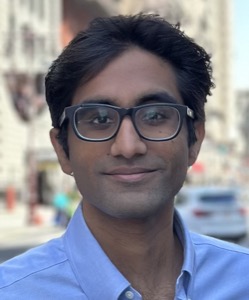
Topic: Computer Vision
Tutorial Leads: Aneel Damaraju, PhD Student, Harvard, and Franc O, PhD Student, Northeastern
Topic: Simulation-Based Inference
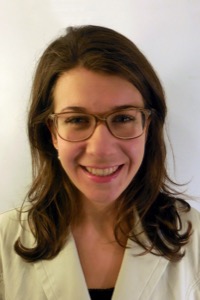
Tutorial Lead: Christina Reissel, IAIFI Fellow
Agenda
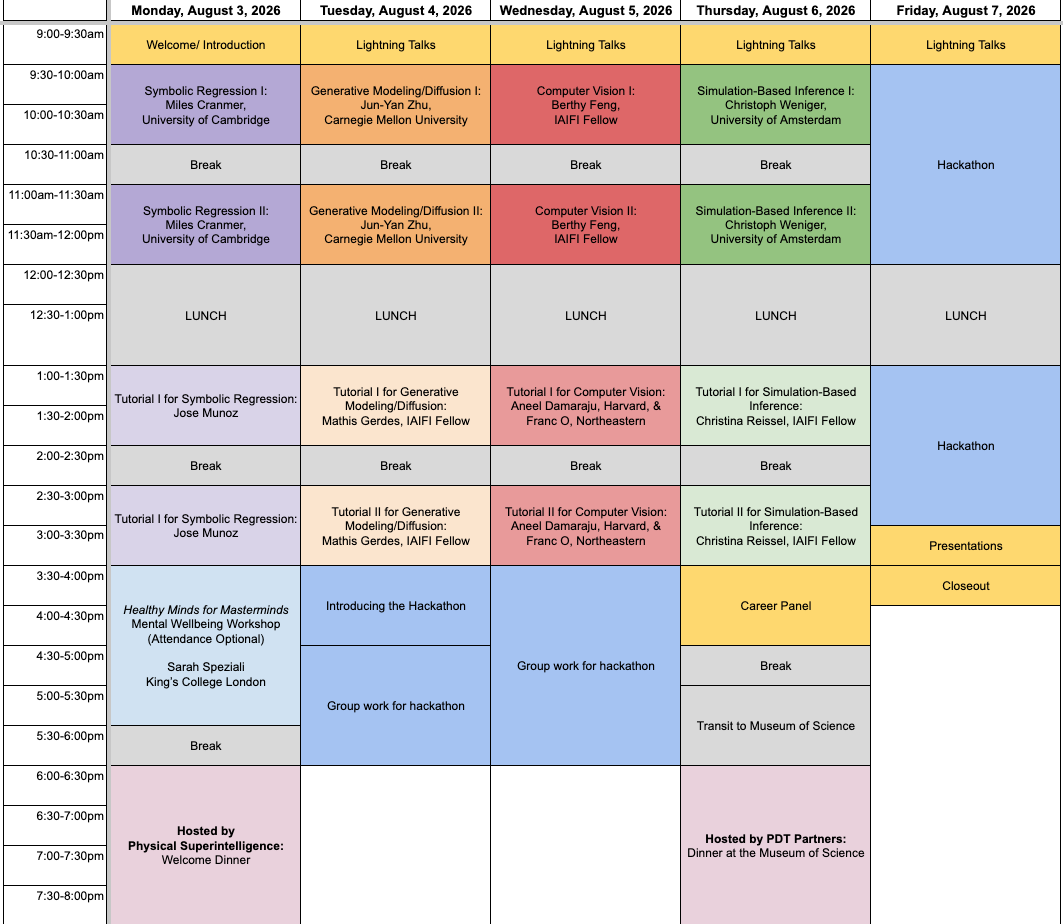
Agenda is subject to change.
Monday, August 3, 2026
9:00–9:30 am ET
Welcome/Introduction
9:30 am–12:00 pm ET
Lecture 1: Automatic Equation Discovery (Miles Cranmer, University of Cambridge)
Would Kepler have discovered his laws if machine learning had been around in 1609? Or would he have settled for the accuracy of a black box regression model, leaving Newton without the inspiration to find the law of gravitation? In this lecture I will introduce symbolic regression: a machine learning task with the objective of finding human-interpretable symbolic models. I will do a deep dive into PySR (github.com/astroautomata/PySR) and its Julia backend SymbolicRegression.jl, covering the internal multi-population evolutionary search, and various new features supporting scientific equation discovery. I will then discuss how to embed domain knowledge in the search, through operator constraints, custom loss functions, and template expressions, which enable learning within a specific functional form. Finally, I will cover symbolic regression as an interpretability tool for deep learning. The afternoon tutorial will provide hands-on practice with the full pipeline.
Resources:
- PySR docs
- code Recommended to install ahead of time and run an example.
- SymbolicRegression.jl docs, for Julia users
- PySR/SymbolicRegression.jl paper
- Discovering Symbolic Models from Deep Learning with Inductive Biases
- SymTorch
- The Next Great Scientific Theory is Hiding Inside a Neural Network (Simons Foundation Presidential Lecture)
12:00–1:00 pm ET
Lunch
1:00–3:30 pm ET
Tutorial 1: Automatic Equation Discovery (Jose Munoz, MIT)
3:30–5:30 pm ET
Healthy Minds for Masterminds
Mental Wellbeing Workshop by Sarah Speziali (King’s College London)
5:30–6:00 pm ET
Break
6:00–8:00 pm ET
Welcome Dinner hosted by our sponsor Physical Superintelligence
Tuesday, August 4, 2026
9:00–9:30 am ET
Lightning Talks
9:30 am–12:00 pm ET
Lecture 2: Efficient Diffusion Models (Jun-Yan Zhu, Carnegie Mellon University)
Diffusion models enable a wide range of applications, from images and video to scientific data, yet their inference remains slow, with computational costs scaling steeply with model size and resolution, posing a prohibitive memory and latency bottleneck for real-world deployment. In this lecture, we will introduce three complementary techniques for closing that gap: (1) few-step distillation, which distills a slow multi-step teacher into a one-step or few-step student using regression losses, adversarial training, or distribution matching; (2) quantization, which lowers weight and activation precision to reduce memory footprint and speed up inference; and (3) caching, a training-free technique that reuses previously computed outputs across denoising timesteps.
Resources:
- The Principles of Diffusion Models
- Flow Matching Guide and Code
- TinyML and Efficient Deep Learning Computing
- Generative models as transport
12:00–1:00 pm ET
Lunch
1:00–3:30 pm ET
Tutorial 2: Efficient Diffusion Models (Mathis Gerdes, IAIFI)
3:30–4:30 pm ET
Hackathon Introduction
4:30–6:00 pm ET
Group work for hackathon
Wednesday, August 5, 2026
9:00–9:30 am ET
Lightning Talks
9:30 am–12:00 pm ET
Lecture 3: Computer Vision & Physics (Berthy Feng, IAIFI/Tayebati Fellow)
Interpreting visual data is an essential part of scientific research. Computer vision enables computers to extract information about the world from visual data, typically images and videos. In this lecture, we will explore the connections between computer vision and science. We will focus on three case studies of how computer vision can be used to advance physics research. Through the three sections, we will learn about core computer vision tools, including phase-based motion processing, diffusion models, and coordinate-based neural networks.
- In Part 1, we look at a method for estimating interior material properties of objects from videos. Combining classical phase-based motion processing with solid mechanics, we apply a physics-based optimization approach to extract physical information that is hidden in plain sight.
- In Part 2, we learn how to use deep learning to solve image reconstruction problems. We explore how diffusion models can be used as sophisticated image priors for inferring images from sparse/noisy sensor measurements.
- In Part 3, we see an example of how computer vision can advance fundamental physics research. We highlight the problem of reconstructing the dynamic 3D gas near a black hole from Event Horizon Telescope (EHT) data, learning how to combine coordinate-based neural networks and physics assumptions to solve this highly ill-posed problem in astrophysics.
Resources:
- It is recommended to set up a Google account if you don’t already have one, for the purpose of running Colab notebooks.
12:00–1:00 pm ET
Lunch
1:00–3:30 pm ET
Tutorial 3: Computer Vision & Physics (Aneel Damaraju, Harvard, and Franc O, Northeastern)
3:30–6:00 pm ET
Group work for hackathon 4:30–6:00 pm ET
Thursday, August 6, 2026
9:00–9:30 am ET
Lightning Talks
9:30 am–12:00 pm ET
Lecture 4: Dynamic Simulation-Based Inference: Extracting Physics from Complex Data and Simulations (Christoph Weniger, University of Amsterdam)
Our physical knowledge often lives inside simulators: forward models that encode our physical knowns and unknowns, but whose likelihoods may be intractable, from gravitational waveforms to cosmological surveys. Simulation-based inference (SBI) turns these simulators into inference engines, training neural networks to estimate posteriors directly from simulated data. We begin with the foundations of modern SBI and amortization, then turn to dynamic SBI: an active learning scheme that continuously focuses costly simulations on the parameter regions that matter. Examples are drawn from gravitational-wave astronomy. We discuss the FALCON framework for distributed dynamic SBI, which enables simultaneous inference of a multitude of parameters in complex forward models. We close with validation strategies, including coverage tests, rank-based diagnostics, and calibration.
Resources:
- Dynamic SBI: Round-free Sequential Simulation-Based Inference with Adaptive Datasets
- Simulation-Based Inference: A Practical Guide
- Awesome Neural SBI
- Machine Learning for Astroparticle Physics
12:00–1:00 pm ET
Lunch
1:00–3:30 pm ET
Tutorial 4: Dynamic Simulation-Based Inference: Extracting Physics from Complex Data and Simulations (Christina Reissel, IAIFI)
3:30–4:30 pm ET
Career Panel
- Berthy Feng (IAIFI)
- Rick Grinnell (Glasswing Ventures)
- Shamit Kachru (PDT Partners)
- Ryan Krueger (Google Deepmind)
- Alessandro Morari (Physical Superintelligence)
- Jesse Thaler (MIT)
4:30–6:00 pm ET
Break
6:00–8:30 pm ET
Social event hosted by our sponsor, PDT Partners
Friday, August 7, 2026
9:00–9:30 am ET
Lightning Talks
9:30 am–12:00 pm ET
Hackathon
Projects
Project details to come.12:00–1:00 pm ET
Lunch
1:00–3:00 pm ET
Hackathon
Projects
Project details to come.3:00–3:45 pm ET
Hackathon presentations
3:45–4:00 pm ET
Closing
Financial Supporters
The Summer School is funded primarily by support from the National Science Foundation under Cooperative Agreement PHY-2019786. Computing resources are provided by the NSF ACCESS program.
We extend a sincere thank you to the following financial supporters of this year’s IAIFI Summer School:
Premier Sponsor

Financial Supporters






If you are interested in providing financial support for the Summer School, please email iaifi-summer@mit.edu.
2026 Organizing Committee
- Will Detmold, Co-Chair (MIT)
- Bill Freeman, Co-Chair (MIT)
- Akshunna Dogra (IAIFI Fellow)
- Berthy Feng (IAIFI Fellow)
- Mathis Gerdes (IAIFI Fellow)
- Juvenal Bassa (UPRM)
- Yize Dong (Harvard)
- Franc O (Northeastern)
- Sneh Pandya (Northeastern)
- Shelley Tong (MIT)
- Lana Xu (MIT)
- Xiaoyuan Zhang (MIT)
- Marisa LaFleur (IAIFI Managing Director)
- Thomas Bradford (IAIFI Project Coordinator)
FAQ
- Who can apply to the Summer School? Any PhD students or early career researchers working at the intersection of physics and AI may apply to the summer school.
- What is the cost to attend the Summer School? There is no registration fee for the Summer School. Students for the Summer School are expected to cover the cost of travel.
- Is there funding available to support my attendance at the Summer School? IAIFI is covering the cost of the Summer School, including lunch each day. There is no support available for travel costs.
- If I come to the Summer School, can I also attend the Workshop? Yes! We encourage you to stay for the IAIFI Summer Workshop and you can stay in the dorms for both events if you choose (at your own expense). Information about the Summer Workshop will be provided in early 2026.
- Will the recordings of the lectures be available? We expect to share recordings of the lectures after the Summer School.
- Will there be an option for virtual attendance? Applications for virtual attendance are now closed.
- How can I book a dorm for the IAIFI Summer School? Information will be shared with accepted students about booking the dorms.
- What if I need childcare in order to attend the Summer School? We are prepared to work with attendees to help coordinate child care as needed. Please contact iaifi-summer@mit.edu and/or indicate it in your application if you would like to discuss.